Stöberby
In progressAndroid app with tasks for real life. Its island looks different for everyone. You can sign up for the test round.
I want to try new things more often, savour things properly and look more closely. Apps where you tick off habits turn that into a duty with a score. Stöberby is not meant to become that. Time in the app is short: remembering, showing, planning. Life happens outside.
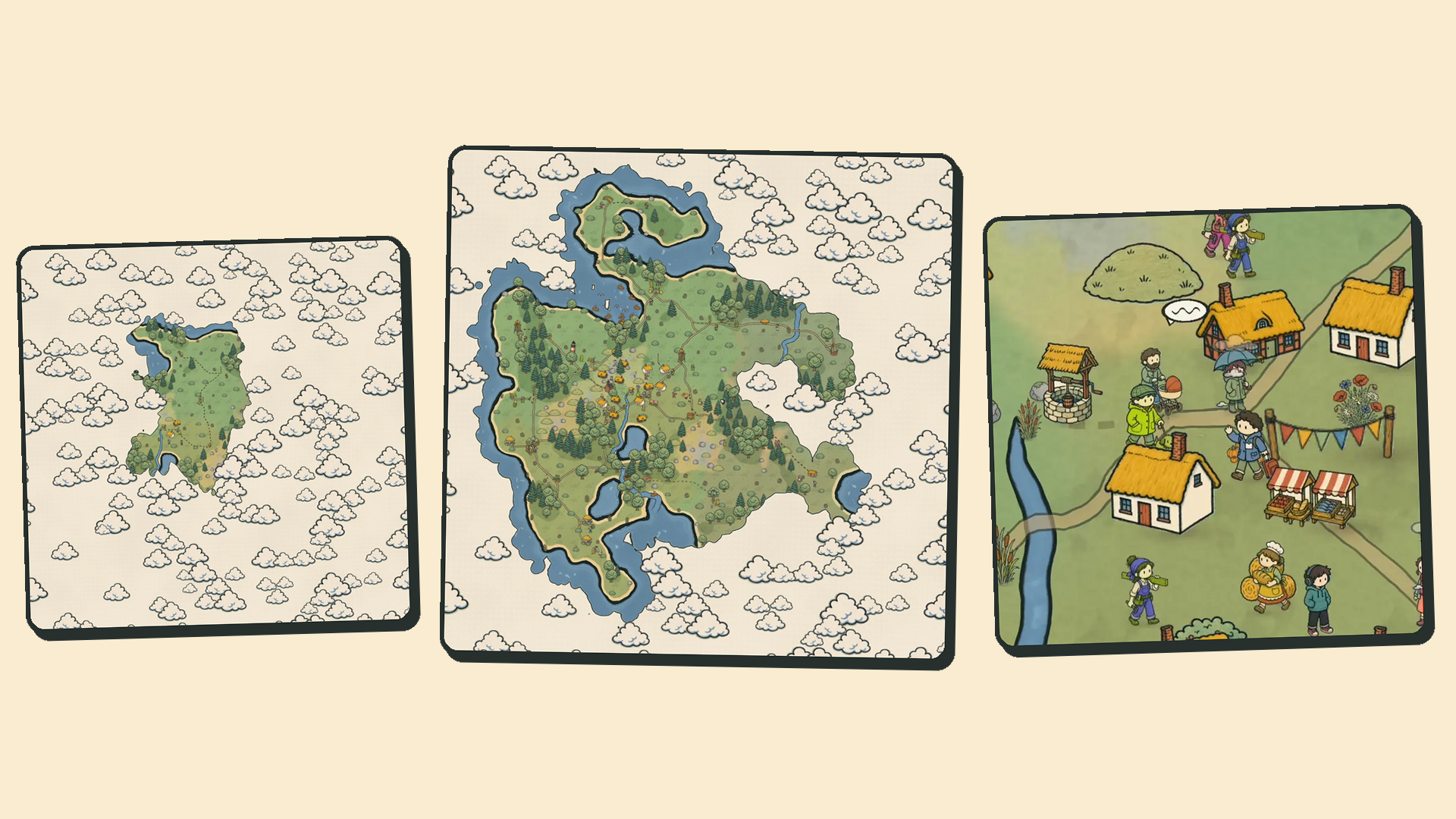
A handful of quests hang on the board, short ones for a few minutes and long ones for weeks. A long one is made of stages, because nobody learns to paint in a day. The texts sound like a friend giving you a nudge: “Order the dish whose name you can’t pronounce. Point at it. That counts.” Every quest belongs to one of four regions, from enjoying to making, and leaves something fitting on the island; for enjoying, that might be an orchard. Doing something for the first time clears fog; doing it again makes the place grow, from saplings to young trees to a full orchard.
So far the concept, the drawing style and a kit of parts are done, and there is a first pile of quest drafts I am still sifting through. Of three style directions the felt-tip one stayed, because a house, a mill and a lighthouse are still recognisable in it at thirty pixels high. The parts of the kit come from my own image generator, with a reference sheet for the style, and are varied slightly on the map: hue, size, mirroring. A prototype of the map runs in libGDX, with drifting clouds, trees swaying in the wind and the time of day from outside.
The island is already online too: on stoeberby.de it clears as you scroll, and you can sign up there for the app’s test round.
Decisions
Made visible, not paid for
The app shows what you have experienced, it does not pay you for it. There is no score and no reward for opening it; what you have done is there on the island. The life on it is only there to be looked at, too: villagers walk to the market in the morning and to the fire pit in the evening, but nothing has to be fed, collected or looked after.
Chapters instead of an endless map
A simulated year with 123 quests showed that the first three months hold up, after six months the island is cleared, and after that hardly anything happens on the map. Now an island is designed to last about six months. Once it is cleared, a boat pulls in and the next one lies in the fog, with a number and a character of its own, such as marsh, heath or sandy upland. The old one stays and keeps growing.
Every island from one number
On first launch the island grows from a starting number: coastlines and rivers, lakes and the borders of the four regions, different for everyone. The same number gives the same map byte for byte, and tests check that. So what gets stored is not the map but what has happened; from the number and that history the app rebuilds the island the same way every time.